 Reviews


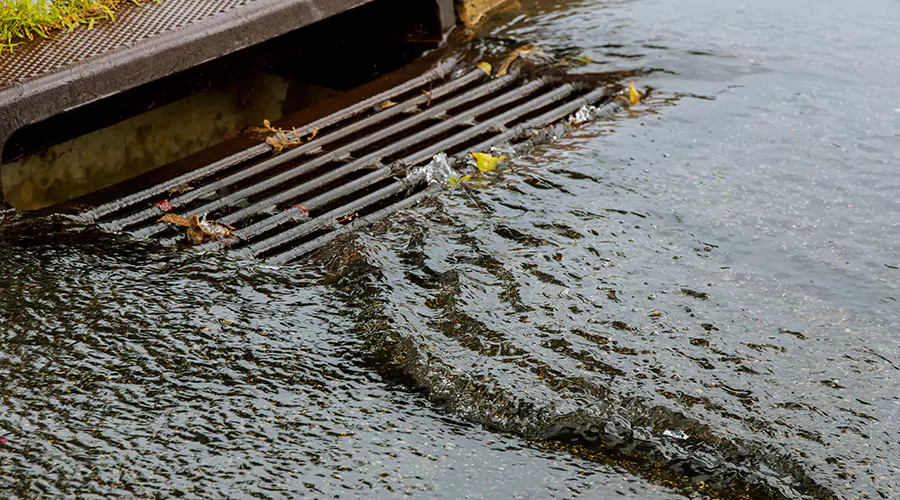
A storm drain is the opening that carries rainwater off streets and yards into underground pipes that lead to a creek, river or lake. The system includes the pipes, gutters, surface conveyances and channels that collect and convey storm water.
Here's the part most people miss: in most cities that water never visits a treatment plant. Whatever washes into the grate flows straight to the nearest waterway.
That single fact explains both why storm drains matter and why the rules around them exist. The full system runs deeper than the grate you step over.
How a Storm Sewer System Works?
A storm sewer system moves water entirely by gravity from the surface to a discharge point. Rain hits pavement, runs downhill to an inlet and travels through progressively larger pipes to an outfall. No pumps and no treatment stand between your curb and the creek in most municipalities.
- The visible part is tiny: The storm grate at the curb is often the only piece of the network anyone sees, while the collection structure and miles of pipe hide below. By definition the pipes carry a narrow cargo: A storm sewer carries storm and surface water while excluding sewage and industrial waste.
- Destination varies by city: Some areas deposit stormwater directly into lakes and streams, while others route it through shared pipes to treatment facilities.
Insider tip: Find your nearest outfall on your city's stormwater map. Seeing where your street's runoff exits makes the "only rain down the drain" rule concrete.
Storm Drains vs Sanitary Sewers
Two separate pipe networks run under most modern streets, and they never mix by design. Modern communities use a two-pipe system with stormwater in one pipe and the sanitary sewer in another, with stormwater discharging to a river or lake while the sanitary line ends at a treatment facility.
| Feature | Storm system | Sanitary system |
|---|---|---|
| Carries | Rain and surface runoff | Sink, toilet and drain wastewater |
| Ends at | A river or lake | A sewage treatment facility |
| Treatment | Usually none | Full processing |
| Entry points | Grates and inlets | Household plumbing |
The pipes tell the story. A storm water drain pipe empties its contents essentially as collected, which is why paint or oil poured at the curb reaches fish within hours. Older cities complicate the picture, since older communities often have a single-pipe system carrying both flows to the same discharge point, and heavy rain there can overwhelm treatment capacity.
In separated cities the split is absolute: The storm water pipe under the street and the sewer main beside it share a trench and nothing else.
The Parts of the System
Four component types build every network: Inlets, pipes, channels and basins. Each scales from backyard size to highway size. Together they form what engineers call the conveyance system.
- Pipes carry the volume: A storm drain pipe under a residential street dwarfs any house drain because it's sized for cloudbursts rather than showers. Materials match the load, since storm sewer pipe is typically reinforced concrete or corrugated plastic rated for burial under traffic. Sizing runs on rainfall math: storm pipe diameter follows the intensity and area of the surfaces draining into it.
- Open routes handle the overflow: A storm drain channel, whether a concrete flood channel or a grassy swale, moves the volumes that buried pipes can't. Ditches and man-made channels count as part of the drainage system in most municipal codes.
Catch Basins Explained
Storm drain catch basins are the system's filters. A catch basin is a specialized storm drain with a sump beneath the surface grate that collects leaves, sand and trash before water flows onward. The design protects every pipe downstream.
- Geometry does the filtering: The bottom of the basin sits deeper than the outlet pipe, creating a sump where solids settle while water flows out. Storm catch basins hold that trapped material until someone removes it, and keeping debris out of the network prevents clogs and extends the whole system's life.
- Pollution control rides along: Stormwater catch basins also capture debris and pollutants that runoff carries, which makes them the last defense before the waterway. The parts have names worth knowing: the surface grate is the drain inlet while the underground box is the basin itself.
- Maintenance keeps the trick working: Water catch basins need cleaning once the sump fills, because a full sump passes debris straight through. Cities vacuum public storm drain basins on rotating schedules, typically with vacuum trucks in spring and fall.
Insider tip: standing water over a grate 24 hours after rain means the sump or its outlet is packed. Report public ones to the city rather than digging yourself.
Residential Storm Drain Systems
A residential storm drain shrinks the municipal idea to yard scale. The same logic applies: collect water at low points and pipe it away before it reaches the foundation. Most home systems combine three collection layers.
Roofs come first. Roof water drainage through gutters and downspouts handles the largest single surface on the property, and extensions should release that water well away from the foundation. Yard drains come second: a residential storm drain is a strategically placed grate connected to a buried French drain that leads water toward the public system. Basins finish the job in wet spots, and a catch basin belongs at the property's lowest point, with large or irregular yards sometimes needing several.
Together these form a complete rain water drainage system that hands water off to the municipal network at the street. Design choice matters at the grate: open grated systems accept water and debris while closed-top systems exclude debris but clog differently.
Insider tip: walk your yard during a hard rain with an umbrella. Ten wet minutes reveal the flow paths and low spots that a dry-day survey never shows.
Why Storm Drains Matter?
Stormwater and drainage design decides where a city floods and what its rivers carry. The system matters twice: once for water volume and once for water quality. Failures in either direction land on property owners first.
Flooding is the volume story. Every paved surface sends rain racing to the inlets instead of soaking into soil, and one blocked inlet can put a foot of water across an intersection in minutes. Pollution is the quality story, since anything on the pavement rides the runoff, and street storm drains are not for disposal of liquids of any kind. Regular Storm Drain Cleaning helps keep inlets clear and reduces the risk of blockages during heavy rain.
The practical rule fits on a bumper sticker: only rain down the drain. Grass clippings, car-wash soap and motor oil all end their journey in the nearest creek.
Who Maintains What
Ownership splits at your property line. The city owns and services the street grates, public basins and mains, while everything on your lot belongs to you. Knowing the split saves misdirected calls and wasted money.
Your side of the job is light:
- Clear your grates: Of leaves before storms and after them.
- Flush yard drains: With a hose each spring to confirm flow.
- Scoop your private basin's sump: Yearly with a gloved hand or small shovel.
- Report public problems: To the city's stormwater line, since a blocked storm sewer grate on your street is their equipment and their liability.
One caution belongs in every household: never lift a public grate or enter any drainage structure. Confined spaces and sudden flows make them genuinely dangerous.
Conclusion
The grate at the curb is the front door of a network that runs from your roof to the nearest river with no treatment in between. Catch basins filter it, pipes size it and gravity powers all of it. Your share of the system is the grates and drains on your own lot. This week, clear the nearest storm drain of leaves before the next rain and you've done real flood prevention.